top of page
Another Crazy Day in AI: An Almost Daily Newsletter

Hello, AI Enthusiasts.


Halfway through the week and your inbox is still judging you? Same. Let’s take a smarter break with a few quick hits from the world of AI.


MIT just gave machine learning its own version of the periodic table—and it actually helps make sense of how different algorithms are connected. It’s like chemistry class, but with more neural nets.


Meanwhile, over at Boise State, what started as a small faculty AI group turned into a full-on community affair.


Also, Google wants to help cities outsmart traffic using AI. Think smoother commutes, fewer emissions, and a whole lot less road rage.


Here's another crazy day in AI:

  • The secret structure of machine learning methods

  • Faculty-led AI group grows into campuswide movement

  • Google’s mobility AI aims to fix city traffic with data

  • Some AI tools to try out


TODAY'S FEATURED ITEM: The Periodic Table That Predicts AI's Future


A robotic scientist in a classic white coat with 'AI Scientist' on its back stands beside a human scientist with 'Human Scientist' on their coat, looking towards the AI Scientist.

Image Credit: Wowza (created with Ideogram)


Have you ever wondered what would happen if we could organize AI algorithms the same way chemical elements are arranged in the periodic table?


New research from MIT introduces a structured framework that visually connects more than 20 classical machine learning algorithms—offering what the researchers call a “periodic table of machine learning.” Led by MIT graduate student Shaden Alshammari, the team developed this framework by identifying a single unifying equation that underlies many well-known algorithms.


Featured in a recent article written by Adam Zewe for MIT News, the research outlines how this shared equation could help researchers reinterpret established approaches, create combinations that haven't yet been explored, and potentially uncover new algorithms entirely. This model, called information contrastive learning (I-Con), functions as both a visual guide and a conceptual tool for navigating the broader landscape of machine learning.


Source: Alshammari, S. et al., I-CON: A Unifying Framework for Representation Learning, ICLR 2025.

Here’s what the framework lays out:

  • A shared mathematical foundation links a broad set of machine learning techniques

  • Algorithms are categorized based on how they estimate data relationships

  • Visual structure highlights both established techniques and theoretical gaps

  • A hybrid model built using the framework outperformed standard classifiers by 8%

  • I-Con supports more thoughtful model development by exposing underlying patterns

  • The approach makes connections across algorithms that previously seemed unrelated


Source: Alshammari, S. et al., I-CON: A Unifying Framework for Representation Learning, ICLR 2025.

Rather than presenting a conclusion, this work opens up more questions. It suggests that the field of machine learning may benefit from stepping back and considering the architecture of its own knowledge. Much like the periodic table organizes the elements in chemistry, this framework encourages researchers to see the relationships among algorithms not as isolated techniques, but as part of an evolving structure.


This perspective invites curiosity. What if frameworks like I-Con could help us better understand how AI evolves? How might this change the way we teach algorithms, explore interdisciplinary applications, or approach innovation? The answers aren't fixed—but having a structured way to think about them might be a valuable place to start.


Read the full article here.

Read the paper here.

OTHER INTERESTING AI HIGHLIGHTS:


Faculty-Led AI Group Grows Into Campuswide Movement

/Boise State Newsroom


What began as a small AI interest group for business faculty at Boise State has blossomed into a thriving cross-campus and community-wide collaboration. The COBE AI Brown Bag group now welcomes educators, IT professionals, students, and even representatives from companies like Google and OpenAI. Faculty use the meetings to share practical applications, from teaching with ChatGPT to exploring AI ethics and job market trends. The group has fostered surprising interdisciplinary connections and helped build a culture of shared AI exploration on campus.


Read more here.


Google’s Mobility AI Aims to Fix City Traffic with Data

/Neha Arora, Software Engineer, and Ivan Kuznetsov, Group Product Manager, on Google Research Blog


Google Research has unveiled Mobility AI, a comprehensive initiative designed to help cities solve transportation challenges using cutting-edge AI. By combining measurement, simulation, and optimization technologies, the program equips public agencies with tools to manage traffic, reduce emissions, and improve safety. From predicting parking difficulty to calibrating full-city traffic simulations, Mobility AI builds on years of research in routing, mapping, and urban mobility. Google hopes to work with agencies, planners, and researchers to bring these innovations to the streets and shape the future of transportation.


Read more here.
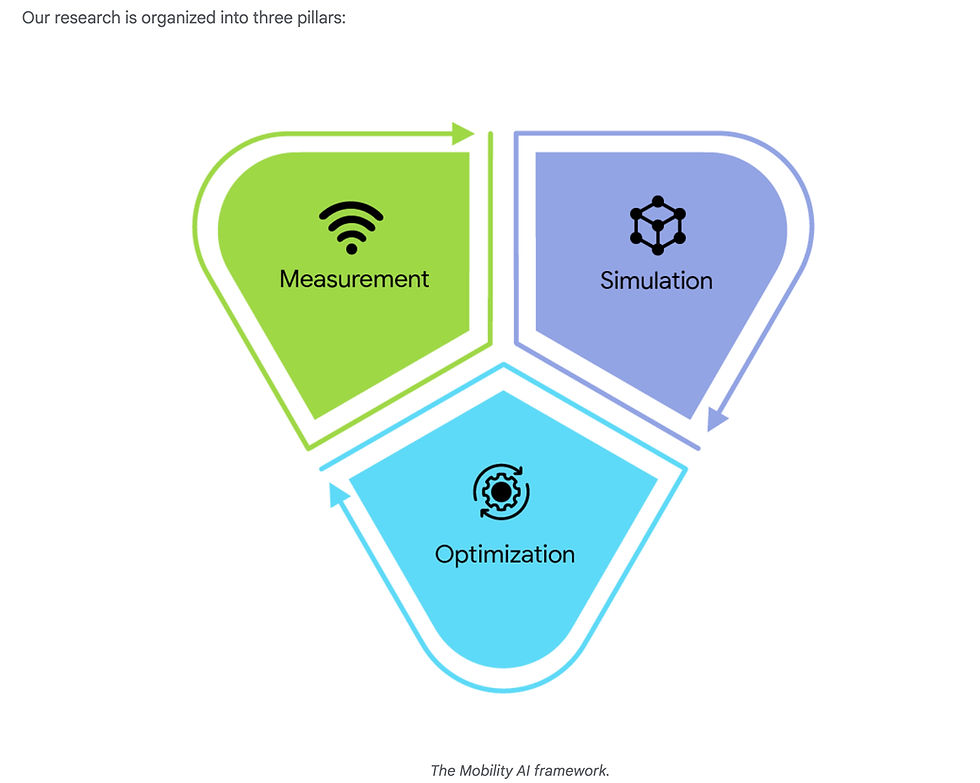
              Source: Google Research
Source: Google Research

SOME AI TOOLS TO TRY OUT:


  • Deeto – Manage and grow your client reference group with ease.

  • Manychat – Automate messaging across IG, WhatsApp, TikTok, and Messenger.

  • Genspark AI Slides – Quickly generate presentation slides with an agentic AI tool.


That’s a wrap on today’s Almost Daily craziness.


Catch us almost every day—almost! 😉

EXCITING NEWS:

The Another Crazy Day in AI newsletter is on LinkedIn!!!


Wowza, Inc.

Leveraging AI for Enhanced Content: As part of our commitment to exploring new technologies, we used AI to help curate and refine our newsletters. This enriches our content and keeps us at the forefront of digital innovation, ensuring you stay informed with the latest trends and developments.


Another Crazy Day in AI: An Almost Daily Newsletter

Hello, AI Enthusiasts.


Popping in with your semi-daily dose of AI and other curiosities.


Mozilla wants to save your sanity—and your tabs. A new experimental feature uses AI to show you what’s behind a link without sending you down the rabbit hole.


Despite all the buzz, nearly half of colleges still don’t offer students access to generative AI tools. But while institutions wait, students are DIY-ing their way into the future.


After losing his son to a rare disease misdiagnosis, a Microsoft engineer built DxGPT—an AI-powered diagnostic assistant now helping hundreds of thousands worldwide.


Okay, now close this tab. You’ve earned it.


Here's another crazy day in AI:

  • Firefox tries something new for better tab management

  • Many colleges still withhold AI tools from students

  • A father builds an AI to diagnose rare diseases

  • Some AI tools to try out


TODAY'S FEATURED ITEM: Firefox Link Preview Experiment


A robotic scientist in a classic white coat with 'AI Scientist' on its back stands beside a human scientist with 'Human Scientist' on their coat, looking towards the AI Scientist.

Image Credit: Wowza (created with Ideogram; edited with Canva)


Are you tired of blindly clicking through endless links only to find they're not what you need?


Mozilla's Firefox Labs 138 has introduced an experimental feature that might save you from tab overload. Ed Lee from The Mozilla Blog recently detailed this Link Preview functionality that lets users get a snapshot of webpage content before committing to opening it. By combining metadata extraction with on-device AI processing, Firefox aims to make browsing more efficient while maintaining privacy.


When enabled, the feature allows users to preview a link's title, description, image, reading time, and a few key points—without actually visiting the page. The best part? All of this is powered by AI running directly on your device, ensuring your data stays private. It’s triggered by a simple keyboard shortcut (Shift + Alt), giving you a quick glimpse of what’s behind a link before you click. This could be a helpful tool for those who often juggle multiple tabs or want to quickly determine if a link is worth opening.


Source: Mozilla
Source: Mozilla

Here's what the early version of Link Preview offers so far:

  • Press Shift + Alt (or Option on Mac) while hovering over a link to see a preview

  • A card appears showing the title, image, short summary, reading time, and three content points

  • Previews are generated entirely on your device using a lightweight local AI model (~369MB download)

  • No scripts, cookies, or external requests are triggered when previewing a page

  • Previews rely on the same engine behind Firefox’s Reader View for clean content extraction

  • Works only with English text at the moment, though more language support may follow

  • Still in testing, but may expand to Android and other platforms in future builds


This blog post is as much a call for feedback as it is a technical breakdown. Mozilla is testing the waters and inviting users to help shape the direction of this feature. Questions around interaction, content access, performance, and multilingual support are all on the table—and the post outlines the specific areas they’re looking to improve.


It’s not a finished product, but it’s a meaningful glimpse into how Firefox might evolve to help users browse with more context and less friction. If you’ve ever opened ten tabs just to find the right one, this kind of feature could be a quiet but powerful improvement to the way we navigate the web. And with everything happening locally on your device, it adds a layer of control that’s rare in today’s browser landscape.


Read the full blog here.

OTHER INTERESTING AI HIGHLIGHTS:


Many Colleges Still Withhold AI Tools from Students

/Colleen Flaherty, Editor, on Inside Higher Ed


Despite growing awareness of AI’s role in workforce readiness, nearly half of colleges still don’t provide students access to generative AI tools, according to a new Inside Higher Ed survey. Institutional cost is the top barrier, followed by ethical concerns and privacy risks. Experts argue that limiting access may worsen the digital divide and leave students underprepared. Some leading universities are experimenting with secure, in-house AI platforms and encouraging culturally responsive tools to expand access equitably.


Read more here.


A Father Builds an AI to Diagnose Rare Diseases

/Juan Montes, Contributor, on Microsoft Newsroom


After his infant son’s painful misdiagnosis, Microsoft engineer Julián Isla turned grief into innovation—developing DxGPT, an AI tool that helps diagnose rare diseases more quickly and accurately. Now used by over 500,000 people and hundreds of doctors, the tool offers fast, secure diagnostic suggestions based on symptom inputs. Built on OpenAI models and hosted on Azure, DxGPT aims to support early intervention and save lives globally. Isla’s journey is a powerful reminder of AI’s potential for compassionate, life-changing impact in healthcare.


Read more here.

SOME AI TOOLS TO TRY OUT:


  • Tablextract – Extract tables from PDFs and images to save hours of manual work.

  • Bookaroozie – Understand books better with AI-powered reading support.

  • Shotup – Turn your screenshots into a searchable knowledge base.


That’s a wrap on today’s Almost Daily craziness.


Catch us almost every day—almost! 😉

EXCITING NEWS:

The Another Crazy Day in AI newsletter is on LinkedIn!!!


Wowza, Inc.

Leveraging AI for Enhanced Content: As part of our commitment to exploring new technologies, we used AI to help curate and refine our newsletters. This enriches our content and keeps us at the forefront of digital innovation, ensuring you stay informed with the latest trends and developments.


Another Crazy Day in AI: An Almost Daily Newsletter

Hello, AI Enthusiasts.


Still catching up from the weekend?


If you're building your first real LLM agent, there's a guide packed with frameworks and patterns that go beyond “chatbots that ghost you.”


In Peru, AI helped archaeologists uncover 303 new Nazca geoglyphs. Who knew tech could rewrite history?


If you thought ChatGPT was just good for casual chats, think again. There’s now a cheat code—R.E.A.S.O.N.—to unlock its ability to think logically, strategically, and even solve complex problems. That’s all for today. Let’s see what this week has to offer.


Here's another crazy day in AI:

  • When and how to build an LLM agent

  • AI solves one of archaeology’s biggest mysteries

  • How to prompt ChatGPT for better logic and critical thinking

  • Some AI tools to try out


TODAY'S FEATURED ITEM: Creating Independent Systems


A robotic scientist in a classic white coat with 'AI Scientist' on its back stands beside a human scientist with 'Human Scientist' on their coat, looking towards the AI Scientist.

Image Credit: Wowza (created with Ideogram)


What makes a digital system truly helpful—when it follows instructions, or when it starts thinking on its own?


OpenAI recently published A Practical Guide to Building Agents, a comprehensive resource for product and engineering teams exploring the development of LLM-powered agents. The guide offers practical insights, design patterns, and best practices for creating systems that can independently handle complex tasks with minimal human oversight, moving beyond basic chatbots to truly autonomous workflow automation. It’s based on lessons learned from actual deployments and is designed to help teams build agents that are capable, reliable, and safe.


Rather than offering a one-size-fits-all solution, the guide walks through when it makes sense to consider agents in the first place—highlighting use cases where traditional automation often falls short. It also introduces the foundational elements of agent design and provides real examples and implementation tips that can be applied whether you’re building from scratch or working with existing tools.


Source: OpenAI, A practical guide to building agents

Inside the guide:

  • What sets agents apart from typical LLM applications and automation tools

  • When agents are the right fit—especially for nuanced, data-rich, or exception-heavy workflows

  • How to design with the three building blocks: model, tools, and instructions

  • Ways to structure logic using both single-agent and multi-agent setups

  • Guidance on writing clear, purposeful instructions to avoid ambiguity

  • Practical guardrail techniques for safety, relevance, and human intervention

  • A roadmap for scaling agent capabilities over time based on real use


Source: OpenAI, A practical guide to building agents

What stands out in this guide is its focus on clarity and practicality. It’s not trying to convince you to adopt agents—it’s helping you figure out if and how they can fit into what you’re building. If your team is facing challenges with brittle rules, ambiguous inputs, or processes that don’t cleanly map to deterministic logic, this resource can help you evaluate whether agents offer a better path forward.


The broader takeaway isn’t just about using a new tool. It’s about revisiting how we think about automation and decision-making in systems. As the boundaries of what language models can do continue to shift, there’s value in pausing to ask: what should we automate, how should we do it, and what kind of control should these systems have? This guide doesn’t answer all of those questions, but it offers a solid starting point for teams willing to explore them.


Read the full paper here.

OTHER INTERESTING AI HIGHLIGHTS:


AI Solves One of Archaeology’s Biggest Mysteries

/Lydia Amazouz, Science Writer, on Daily Galaxy


AI has helped archaeologists uncover 303 new Nazca geoglyphs in just six months, doubling the number of known figures and offering powerful insights into the mysterious desert carvings of Peru. By analyzing aerial imagery, researchers from Yamagata University and IBM trained AI to detect patterns invisible to the human eye. This milestone is reshaping how archaeologists approach historical analysis—cutting down research time drastically while boosting accuracy. Experts say AI could soon become essential in studying other ancient sites worldwide, from buried cities to shipwrecks.


Read more here.


How to Prompt ChatGPT for Better Logic and Critical Thinking

/Jafar Najafov, AI Educator & Creator on X


While many use ChatGPT for casual queries or writing help, very few know how to unlock its real superpower—structured reasoning. In a viral X thread, AI educator Jafar Najafov shared a full cheatsheet on how to prompt ChatGPT as a logical analyst, math coach, or strategy consultant, among other roles. By combining these roles with tasks like ethical scenarios or decision matrices, users can turn ChatGPT into a high-level critical thinking assistant. The R.E.A.S.O.N. formula he shares makes it easy to write better prompts—and get smarter, more structured responses in return.


Read more here.

Source: Jafar Najafov (@JafarNajafov) on X

SOME AI TOOLS TO TRY OUT:


  • DocsHound – Auto-generates docs, chatbots, and onboarding from a single product demo.

  • Checklist – Create and manage checklists for repeatable tasks—free to try.

  • Google Whisk Animate – Instantly turn images into smooth 8-second animations.


That’s a wrap on today’s Almost Daily craziness.


Catch us almost every day—almost! 😉

EXCITING NEWS:

The Another Crazy Day in AI newsletter is on LinkedIn!!!


Wowza, Inc.

Leveraging AI for Enhanced Content: As part of our commitment to exploring new technologies, we used AI to help curate and refine our newsletters. This enriches our content and keeps us at the forefront of digital innovation, ensuring you stay informed with the latest trends and developments.


Copyright Wowza, inc 2025
bottom of page