top of page
Another Crazy Day in AI: An Almost Daily Newsletter

Hello, AI Enthusiasts.


Fresh off the weekend—let’s dive into another week of AI breakthroughs!


Google is rolling out two major upgrades for Gemini Live, enabling it to process live video and interact with your screen in real time.


AI is also making waves in academia, with smarter databases that enhance search precision and summarize key research, helping scholars cut through the noise faster than ever.


And in the creative space, the rise of AI-generated art has divided artists—some view it as a collaborative tool, while others worry about the implications for authenticity and ethics.


That’s enough AI for one day… or is it?


Here's another crazy day in AI:

  • Screen Sharing and Live Video coming to Gemini

  • New AI tools help researchers summarize and discover studies faster

  • AI is gaining acceptance among artists, especially for early ideation

  • Some AI tools to try out


TODAY'S FEATURED ITEM: See What Gemini Sees

A robotic scientist in a classic white coat with 'AI Scientist' on its back stands beside a human scientist with 'Human Scientist' on their coat, looking towards the AI Scientist.

Image Credit: Google


What if your AI assistant could see what you see and help you in real time?


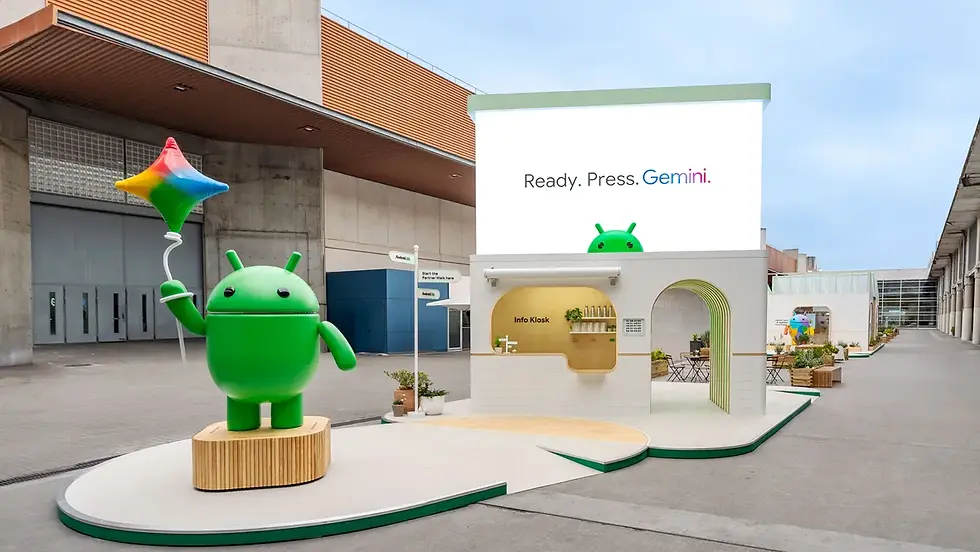
Google is adding two new features to Gemini Live—live video and screen sharing—designed to make interactions more dynamic. Announced at Mobile World Congress (MWC), these updates will roll out later this month, but only for Gemini Advanced subscribers. Ryan McNeal from Android Authority dives into the details of these new features.


What’s coming to Gemini Live?

  • Live video assistance – Point your camera at something, and Gemini can analyze it in real time.

  • Screen sharing support – Share your screen with Gemini and get help with what’s on display.

  • Limited access for now – These features will first be available to Gemini Advanced users through the Google One AI Premium plan.


These updates could make AI feel more interactive, but how well they perform in real-world situations is another question. Google’s demo highlights Gemini helping a ceramicist choose a glaze and offering outfit ideas based on an image. While these examples show off the technology’s potential, real-life scenarios are rarely that controlled. Factors like lighting, angles, and object recognition could all impact how effectively Gemini understands what it sees. Even Google acknowledges that results may vary.


There’s also the question of accessibility. Right now, these features are locked behind a subscription, which limits who gets to try them out. Google has a pattern of introducing AI tools to paid users first and gradually expanding access, so it’s possible that live video and screen sharing will follow a similar path. Whether or not they become widely available, they mark a step toward AI that engages with the world in a more direct and visual way. The real test will be how well it adapts to everyday use and whether it becomes a genuinely helpful tool—or just another tech demo with promise.


Read more here.

Watch Gemini Live with Video and Screenshare.

OTHER INTERESTING AI HIGHLIGHTS:


New AI Tools Help Researchers Summarize and Discover Studies Faster

/James Laird on Baylor News


Academic research is evolving as AI-powered tools like Scopus AI help faculty and students refine search results and summarize articles more efficiently. These AI-driven databases scan massive collections of academic papers, generate concise summaries, and highlight key researchers in a given field, making the research process more accessible. While some, like Billie Peterson-Lugo, praise AI’s ability to streamline discovery, others remain skeptical about its accuracy and reliability. As AI tools improve, they are expected to play an even greater role in research workflows.


Read more here.


AI Is Gaining Acceptance Among Artists, Especially for Early Ideation

/Meghan McCarty Carino on Marketplace


Despite ongoing legal battles over AI’s use of copyrighted works, many artists and designers are finding ways to incorporate AI into their workflows. Some, like Nicola Hamilton of the Association of Registered Graphic Designers, say AI boosts efficiency in brainstorming and design tasks. Others, like digital artist Elise Swopes, use AI tools to save time on tedious edits and enhance their creative process. While skepticism remains in industries like branding and entertainment, platforms like Fiverr are exploring AI models that let artists control their own digital styles.


Read more here.

Source: Marketplace, Pentagram

SOME AI TOOLS TO TRY OUT:


  • Mesh - Automated bookkeeping with instant financial insights.

  • Forage - Filters low-priority emails into a daily summary.

  • Lemni - AI agents for customer interactions via email, phone, and outreach.


That’s a wrap on today’s Almost Daily craziness.


Catch us almost every day—almost! 😉

EXCITING NEWS:

The Another Crazy Day in AI newsletter is now on LinkedIn!!!


Wowza, Inc.

Leveraging AI for Enhanced Content: As part of our commitment to exploring new technologies, we used AI to help curate and refine our newsletters. This enriches our content and keeps us at the forefront of digital innovation, ensuring you stay informed with the latest trends and developments.


Another Crazy Day in AI: An Almost Daily Newsletter

Hello, AI Enthusiasts.


Friday night AI check-in—made it through the week! How was yours?


On the 404 Media podcast, investigative journalists explore AI’s disruptive impact on publishing and labor—sparking debates on the role of automation in creative fields.


OpenAI just teamed up with the U.S. Department of Energy’s national labs for an AI-powered research sprint involving 1,000 scientists. Could this change the way we conduct scientific breakthroughs?


And in the corporate world, a new study finds IT leaders focused on cutting costs and improving efficiency rather than chasing ambitious AI projects.


The week’s over, but the AI conversation continues. Until next time!


Here's another crazy day in AI:

  • Work, creativity, and the AI disruption

  • Can AI speed up science? 1,000 researchers put it to the test

  • Study reveals IT leaders favor AI for productivity over innovation

  • Some AI tools to try out


TODAY'S FEATURED ITEM: The Trouble with AI-Generated Everything


A robotic scientist in a classic white coat with 'AI Scientist' on its back stands beside a human scientist with 'Human Scientist' on their coat, looking towards the AI Scientist.

Image Credit: Wowza (edited with Canva)


Did AI just steal a book? And what about factory workers?


In a recent episode of the 404 Media podcast, award-winning investigative journalist Joseph Cox shares how someone used AI to create a cheap, low-quality summary of his book and sell it on Amazon. The discussion doesn’t stop there—Cox and his co-hosts dive into the ethical concerns of AI-generated content, a controversial startup that dehumanizes factory workers with machine surveillance, and a peculiar AI-generated video involving Elon Musk and Donald Trump.


What’s Inside This Episode:

  • AI vs. Authors – Joseph Cox finds a poor AI-generated ripoff of his book for sale, sparking a conversation on intellectual property and the value of real writing.

  • AI & Factory Workers – The team exposes Optify, a Y Combinator-backed startup using AI-powered surveillance to track factory workers' productivity, raising major ethical concerns.

  • The Dark Side of AI Content – How AI-generated summaries and low-quality content are flooding the market, diluting original works.

  • Tech vs. Humanity – A critical take on how startups often prioritize efficiency and profit over ethical labor practices.

  • Musk, Trump & AI Weirdness – A strange AI-generated video surfaces, possibly as a protest from within the U.S. government.


These conversations touch on an uncomfortable reality: AI isn’t just automating tasks—it’s beginning to replace real human effort in ways that are ethically murky. When AI-generated content appears next to genuine work, it blurs the line between what’s real and what’s artificially produced. For writers and creatives, this raises concerns about ownership, quality, and the devaluation of original ideas.


At the same time, AI is quietly reshaping the workplace. A system designed to track factory workers may sound like an efficiency tool, but it also introduces new concerns about privacy, job security, and the increasing role of surveillance in everyday labor. The way AI is being implemented matters, and without careful oversight, we risk trading human dignity for technological convenience. The question isn’t just about what AI can do—it’s about what it should do.


Read more here.

Watch the video podcast on YouTube.

Listen to the podcast on Apple Podcast or Spotify.

OTHER INTERESTING AI HIGHLIGHTS:


Can AI Speed Up Science? 1,000 Researchers Put It to the Test

/OpenAI


In a groundbreaking collaboration, OpenAI and the U.S. Department of Energy’s national labs have brought together 1,000 scientists across nine national labs for an AI-powered scientific jam session. Researchers are using OpenAI’s o3-mini model to explore solutions in materials science, renewable energy, astrophysics, and more. The event, hosted across major U.S. national labs, aims to integrate AI-driven insights into scientific discovery and strengthen America’s leadership in AI. Findings from this first-of-its-kind event will be published in a follow-up report, shaping the future of AI-assisted research.


Read more here.


Study Reveals IT Leaders Favor AI for Productivity Over Innovation

/Grant Gross, CIO


A new AI Priorities Study reveals that IT leaders are prioritizing efficiency and cost-cutting over groundbreaking innovation. More than two-thirds of IT leaders are focusing on AI-driven employee productivity, while fewer are investing in AI to expand revenue or drive new innovations. Despite AI’s potential as a workforce assistant, over half of IT leaders expect AI to eventually reduce jobs. The report also highlights debates over whether companies should pay extra for AI features, with many CIOs expecting AI to be bundled into existing tools rather than incurring additional costs.


Read more here.


Credit: Foundry / CIO.com

SOME AI TOOLS TO TRY OUT:


  • Macro - All-in-one AI superapp for PDFs, notes, docs, code, images, and more in a single tab.

  • Quanta - Instant, automated accounting—no more waiting weeks for your data.

  • Deep Review by SciSpace - AI-powered assistant for systematic literature reviews.


That’s a wrap on today’s Almost Daily craziness.


Catch us almost every day—almost! 😉

EXCITING NEWS:

The Another Crazy Day in AI newsletter is now on LinkedIn!!!


Wowza, Inc.

Leveraging AI for Enhanced Content: As part of our commitment to exploring new technologies, we used AI to help curate and refine our newsletters. This enriches our content and keeps us at the forefront of digital innovation, ensuring you stay informed with the latest trends and developments.


Another Crazy Day in AI: An Almost Daily Newsletter

Hello, AI Enthusiasts.


Weekend loading... but first, AI news!


OpenAI’s new GPT-4.5 is here (well, almost). The research preview hints at better reasoning, fewer hallucinations, and AI that feels more intuitive than ever.


Meanwhile, Meta is gearing up for a major AI showdown with plans to launch a standalone AI app in 2025 to rival ChatGPT and Google Gemini.


And speaking of Google—developers rejoice! Gemini Code Assist is now free, with the highest usage limits for AI-powered coding.


Now, time to power down… AI will be here when you’re back. 😴


Here's another crazy day in AI:

  • OpenAI’s latest model update

  • Can Meta AI take on ChatGPT? A standalone app is coming

  • Google makes Gemini code assist free for developers

  • Some AI tools to try out


TODAY'S FEATURED ITEM: A Closer Look at GPT-4.5


A robotic scientist in a classic white coat with 'AI Scientist' on its back stands beside a human scientist with 'Human Scientist' on their coat, looking towards the AI Scientist.

Image Credit: Wowza (edited with Canva)


What might be possible when AI understands not just your words, but your intentions?


OpenAI just introduced GPT-4.5, their most advanced model yet, designed to enhance fluency, creativity, and accuracy. This research preview, available to Pro users and developers, represents a significant step forward in AI’s ability to recognize patterns, follow intent, and generate more insightful responses. While GPT-4.5 isn’t flawless, early testing suggests it makes fewer errors, offers more nuanced understanding, and improves overall reliability.


In a video, Mia Glaese, Rapha Gontijo Lopes, Youlong Cheng, Jason Teplitz, and Alex Paino introduce and demo GPT-4.5, highlighting its advancements in reasoning, collaboration, and practical applications.


Some notable improvements in this release:

  • Sharper accuracy – Improved comprehension and fewer hallucinations.

  • Stronger reasoning skills – More effective at following logic and complex instructions.

  • More natural conversations – Responses feel smoother, more coherent, and context-aware.

  • Enhanced multilingual support – Better performance across a wider range of languages.

  • Refined coding assistance – Smarter debugging, optimized code suggestions, and better problem-solving for developers.

  • Increased adaptability – Handles diverse tasks more effectively, from research to creative writing.


With each new iteration, AI inches closer to a more seamless and intuitive user experience. The improvements in GPT-4.5 reflect a growing focus on not just what AI can generate, but how well it understands intent. As models become better at interpreting context and responding thoughtfully, the line between machine-generated and human-like communication continues to blur.


But with these advancements comes the need for careful consideration. AI that understands intent could be incredibly powerful—helping people work faster, learn more efficiently, and even express themselves in new ways. At the same time, it raises questions about reliability, ethical use, and unintended consequences. The challenge now is not just building smarter models but ensuring they are used responsibly, with transparency and safeguards in place.

As we explore what’s possible with AI, one thing is clear: the way we interact with technology is evolving. And how we choose to shape this relationship will define its impact on our daily lives.


Read the full article here.

Watch the video here.

OTHER INTERESTING AI HIGHLIGHTS:


Can Meta AI Take on ChatGPT? A Standalone App is Coming

/Jonathan Vanian, CNBC


Meta is preparing to launch a standalone AI app in the second quarter of 2025, aiming to compete directly with ChatGPT and Google Gemini. The app is a major step in CEO Mark Zuckerberg’s push to make Meta the leader in AI by the end of the year. Currently, Meta AI is only available within Facebook, Instagram, WhatsApp, and Messenger, but a separate app could allow for deeper personalization and expanded features. Meta is also planning to introduce a paid subscription service for Meta AI, similar to OpenAI’s ChatGPT Plus. With AI assistants becoming a central battleground in tech, Meta’s move signals an escalation in the AI race.


Read more here.


Google Makes Gemini Code Assist Free for Developers

/Ryan J. Salva, Senior Director, Product Management, Google


Google is making Gemini Code Assist free for developers, providing AI-powered coding help with the highest free usage limits available. Unlike other free AI coding tools, which cap usage at 2,000 completions per month, Gemini Code Assist offers up to 180,000 completions—enough for even the most active developers. The tool supports all major programming languages and integrates with Visual Studio Code, JetBrains IDEs, and GitHub. Additionally, AI-powered code review assistance is now available, allowing developers to automate pull request reviews and improve code quality. With AI becoming a standard part of software development, Google’s move makes advanced coding tools accessible to everyone, from students to freelancers to startups.


Read more here.

Gemini Code Assist provides a summary of a pull request and improvement suggestions. Then, when prompted, Gemini provides code readability suggestions. Source: Google

SOME AI TOOLS TO TRY OUT:


  • DeepTutor - AI research assistant for in-depth academic and professional analysis.

  • Caramel - AI-powered ad platform for easy, high-performing campaigns.

  • Octave TTS - Creates lifelike speech with adjustable tone and style.


That’s a wrap on today’s Almost Daily craziness.


Catch us almost every day—almost! 😉

EXCITING NEWS:

The Another Crazy Day in AI newsletter is now on LinkedIn!!!


Wowza, Inc.

Leveraging AI for Enhanced Content: As part of our commitment to exploring new technologies, we used AI to help curate and refine our newsletters. This enriches our content and keeps us at the forefront of digital innovation, ensuring you stay informed with the latest trends and developments.


Copyright Wowza, inc 2025
bottom of page